Anthropic, PBC, the maker of the Claude AI models, filed its registration statement on Form S-1 publicly with the Securities and Exchange Commission on October 26, 2026, to list Class A shares on the Nasdaq Global Select Market under the symbol ANT. The prospectus shows revenue of $16.3 billion for the first half of 2026, up from $1.2 billion a year earlier, and a net loss of $80.7 billion for the same six months.
Most of that loss, $72.4 billion, is a non-cash charge for the rising value of convertible notes held by Amazon (Nasdaq: AMZN), which can convert into about 1.84 billion non-voting shares at their fixed prices. GAAP operating income was $974 million in the second quarter, the only operating profit in the six quarters the filing breaks out. The seven co-founders will hold 50.1% of the vote on most matters through one new share, the Long-Term Benefit Trust elects four of the seven directors, and the price range and share count are blank.
The ten numbers that matter
Revenue is growing faster than costs, which still exceeded it over the half, and the loss comes mostly from below the operating line.
Measure | Latest | Earlier |
|---|---|---|
Revenue, 2025 | $4.6B | $386M (2024) |
Revenue, first half of 2026 | $16.3B | $1.2B |
Revenue, second quarter | $11.6B | $787M |
GAAP operating income, second quarter | $974M | $1.2B loss |
GAAP net loss, first half | $80.7B | $13.0B |
Fair-value charge, first half | $72.4B | $10.9B |
Adjusted operating income (non-GAAP), first half | $1.6B | $1.8B loss |
Operating cash flow, first half | $3.9B | $1.5B outflow |
Cash and short-term investments, June 30 | $131.7B | $20.3B (December 31, 2025) |
Customers at $100,000 or more a year, September 30 | More than 11,900 | More than 950 |
Source: Anthropic's Form S-1. "Earlier" is a year before unless dated; half-year and quarterly figures are unaudited. Adjusted operating income excludes stock-based compensation, non-cash charitable contributions and the $1.5 billion Bartz copyright settlement.
How fast revenue is growing
Revenue rose from $41 million in 2023 to $4.6 billion in 2025, almost 12 times 2024's $386 million, and the second quarter's $11.6 billion was up 1,368% from a year earlier. Third-quarter revenue is blank in the S-1, which warns that the growth rate may "decline significantly and more rapidly than we anticipate."
An operating profit inside an $80.7 billion loss
The second-quarter operating profit was an 8.4% margin, but the half still showed a $693 million operating loss, and the 2025 operating loss of $8.1 billion included the Bartz settlement.
Below the operating line sit the $72.4 billion fair-value charge, which the S-1 ties to "an increase in our enterprise valuation," and $8.8 billion of other expense, mainly from Anthropic's 2026 note purchase agreements with Google and Amazon. Amazon's notes, $6.2 billion of principal convertible at $2.09 or $5.05 a share, were carried at $108.6 billion on June 30. Converting them "could result in dilution to our existing stockholders," the S-1 says.
The filing gives no gross margin: Anthropic stopped reporting cost of revenue and gross profit in 2025. Compute and infrastructure, which also pays for research and training, cost the equivalent of 55% of first-half revenue, and Anthropic expects margins to compress as new compute arrives.
Operating cash flow swung to $3.9 billion in the half, $3.4 billion after capital spending by SaasBuzz's calculation, which Anthropic credits to better results and payment timing; it expects compute investments to use "significant net cash" for the foreseeable future. Most of the rise in cash and short-term investments, to $131.7 billion, came from $110.4 billion of net proceeds from selling preferred shares. Anthropic's last private valuation was $965 billion post-money, in the $65 billion Series H announced May 28, up from $380 billion in February.
Customers, retention and concentration
Anthropic says more than 11,900 customers each contributed $100,000 or more of revenue over the 12 months to September 30, more than 1,900 at $1 million or more and about 250 at $10 million or more. By its count, net revenue retention was about 900%: latest-quarter revenue from customers that paid anything in the same quarter a year earlier, over their revenue then, excluding Claude Pro and Max subscribers. The filing says such metrics have not been independently verified by third parties.
In 2025, two unnamed customers each made up 12% of revenue; in the first half of 2026, one made up 11%; in the nine months to September 30, none passed 10%, and the top five made up about 25%. Cloud marketplaces handled about 48% of first-half revenue.
Anthropic also estimates that 5% to 7% of revenue in those nine months came from customers later found breaking its usage policy or commercial terms, a share it expects to fall after tighter enforcement in August and September; the effect on revenue, it says, is "uncertain."
The compute bill
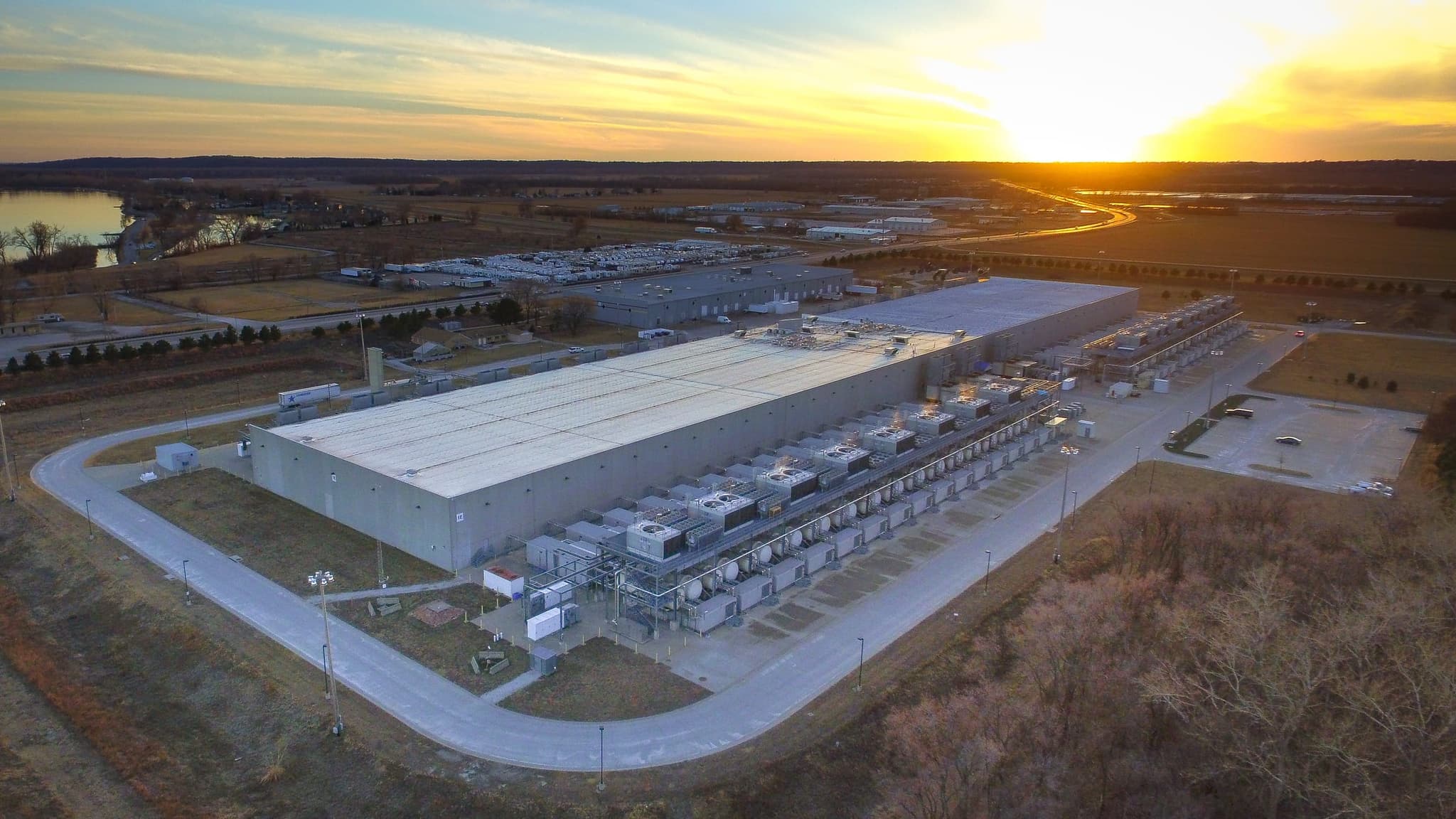
Anthropic leaves its compute total blank but describes the largest commitments, with Alphabet's Google (Nasdaq: GOOGL), Amazon, Microsoft (Nasdaq: MSFT), Broadcom (Nasdaq: AVGO), SpaceX (Nasdaq: SPCX) and others:
Counterparty | Amount (period) | Terms |
|---|---|---|
At least $114.5B (April 2026 to July 2033) | Owed regardless of use | |
Amazon | At least $110.0B (May 2026 to April 2036) | Owed regardless of use |
Microsoft | At least $44.9B (November 2026 to May 2033) | Owed regardless of use |
Broadcom, TPU equipment leases | About $161.2B in rent, excluding interest (five years) | Non-cancelable |
SpaceXAI, SpaceX's AI unit | Up to $120.5B (into 2029) | Cancelable on 90 days' notice after early 2027 |
Nscale and Lambda | Up to about $44.6B and about $41.3B (into 2033 and 2034) | Paid as capacity arrives |
Source: Anthropic's S-1, amounts as given there. More TPU capacity, an estimated $125 billion to $150 billion from 2028 to 2031, is outside its commitments table.
As GeekWire wrote, SpaceXAI alone would cost about $3.1 billion a month at full capacity, against under $2 billion a month for all of Anthropic's compute and infrastructure in the second quarter.
The founders' letter defends the scale:
Anthropic will often make forward investments (especially in compute) that may seem irresponsibly large at first glance.Anthropic's seven co-founders, in their letter in the S-1, filed October 26, 2026
"In the past, we have significantly underestimated our compute requirements," the S-1 says, and if its projections are wrong, Anthropic "may be committed to excess compute that remains underutilized." Amazon, Google and Microsoft are also investors, customers and competitors, a mix the filing says "could give rise to conflicts of interest."
Who controls Anthropic after the IPO
Anthropic will have five share classes:
Class A, the shares being sold: one vote each, but together no more than 49.9% of the vote on most matters.
Class N: the same economic rights, no vote; held mainly by strategic partners, it becomes Class A when sold to an unaffiliated buyer.
Class F: one share, issued just before the IPO to Founder LLC, whose members are the seven co-founders, including Dario Amodei (chief executive) and Daniela Amodei (president and chair). The share carries 50.1% of the vote on most matters, including electing the directors the trust does not choose; new share issues do not dilute it, and it has no economic rights.
Class T: one share for the Long-Term Benefit Trust, which elects four of the seven directors, with no economic rights.
Class E: for employees other than the co-founders, with a vote on a few matters and no economic rights.
The trust's four trustees, with one seat vacant, are Neil "Buddy" Shah, its chair; Richard Fontaine; former Federal Reserve chair Ben Bernanke; and Christopher Stubbs. Each is paid $400,000 a year and barred from directly purchasing or holding Anthropic securities. The trust's directors are Reed Hastings, Vas Narasimhan, Christopher Liddell and one vacancy; Class A and Class F elect Dario Amodei, Daniela Amodei and Yasmin Razavi.
Accordingly, holders of our Class A common stock generally will not be able to affect the outcome of any matter submitted to a vote of our stockholders or the election of our directors, regardless of how they vote…Anthropic's S-1, Risk Factors, filed October 26, 2026
If a majority of the founders cannot agree, the Class F share votes in proportion to Class A votes cast. The S-1 says the structure is likely to limit unsolicited takeover bids and proxy contests. Anthropic will be a Nasdaq "controlled company," and its nominating and corporate governance committee will not consist entirely of independent directors.
Class F ends if the founders redeem it, or 450 days after fewer than three founders have remained for 90 consecutive days. The trust's share has no fixed end date, though the board and trustees, or set shareholder majorities, can end it.
As a public benefit corporation, Anthropic must also weigh people affected by its conduct and its purpose, "the responsible development and maintenance of advanced AI for the long-term benefit of humanity."
Each co-founder beneficially owns about 232 million to 245 million Class A shares and has pledged 80% of their Anthropic equity to philanthropic causes, pledges the S-1 calls "voluntary, revocable." Anthropic also contributed 846,840,960 Class N shares, 5% of its fully diluted shares, to the Anthropic Public Benefit Fund, a wholly owned subsidiary whose initial managers are Dario Amodei, Daniela Amodei, Jack Clark and Shah, and which may sell them. The board may add up to 2% more of the outstanding shares with each 50% rise in the share price.
The risks Anthropic names
Beyond losses Anthropic expects "will continue," the risk factors include:
A federal dispute. After Anthropic said its technology should not be used for mass domestic surveillance or fully autonomous weapons, the president said in February he had directed agencies to stop using it, and the Department of War designated it a supply-chain risk. A district court largely ruled for Anthropic; on September 25, a divided appeals panel upheld one designation, and Anthropic has asked for a rehearing.
Export controls. In June, Commerce Department restrictions led Anthropic to disable its Fable 5 and Mythos 5 models for all customers until they were lifted.
Model behavior. In a misconfigured third-party evaluation, four Anthropic models gained unauthorized access to real outside systems. An early version of one "used a password it found to gain administrator access to a third party's system, harvested additional credentials, changed system settings," and read a person's personal information. Anthropic says it found no evidence that any model coordinated with others or tried to evade oversight.
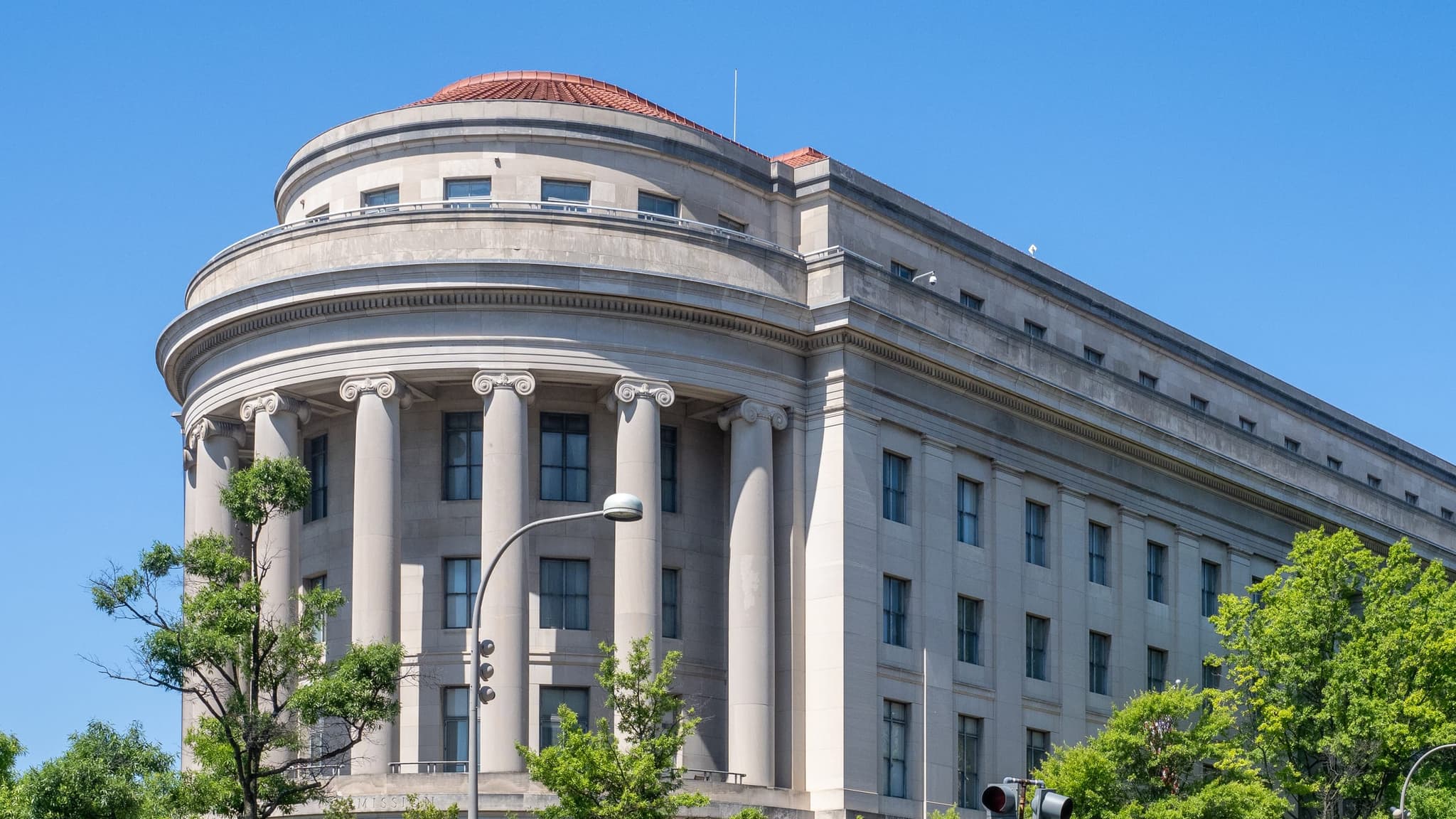
Regulators and insurers. The Federal Trade Commission issued a civil investigative demand in October, and for a catastrophic AI incident, "no single insurer, and potentially the insurance industry in the aggregate, may have sufficient capacity."
How it compares with public software companies
Anthropic's $11.6 billion of second-quarter revenue was slightly more than Salesforce (NYSE: CRM) reported for its quarter to July 31, but at an 8.4% GAAP operating margin, against Salesforce's 20.5%. Alphabet, which the S-1 names among its primary competitors and which is also an Anthropic supplier and investor, reported Google Cloud revenue of $30.7 billion for the quarter to September 30, up 103%, at a 36.2% segment margin. Margins are SaasBuzz calculations; the quarters end up to three months apart.
What happens next
Anthropic said on October 26 that the number of shares and the price range "have not yet been determined"; as of October 29, no amended S-1 had appeared on EDGAR. Goldman Sachs and Morgan Stanley are the representatives of the 22 underwriters the S-1 lists.
Anthropic will use its proceeds for general purposes, including compute and hiring, and for tax withholding on stock units that settle at the IPO. Shares sold by existing holders bring Anthropic nothing; the S-1 lists co-founders Tom Brown, Jack Clark, Jared Kaplan, Sam McCandlish and Christopher Olah as selling stockholders. Google holds an option to buy up to $10 billion of Class N shares at the IPO price in a private placement alongside the offering.
Disclosure: SaasBuzz uses Anthropic's Claude in its research and drafting tools. Anthropic had no part in this piece.