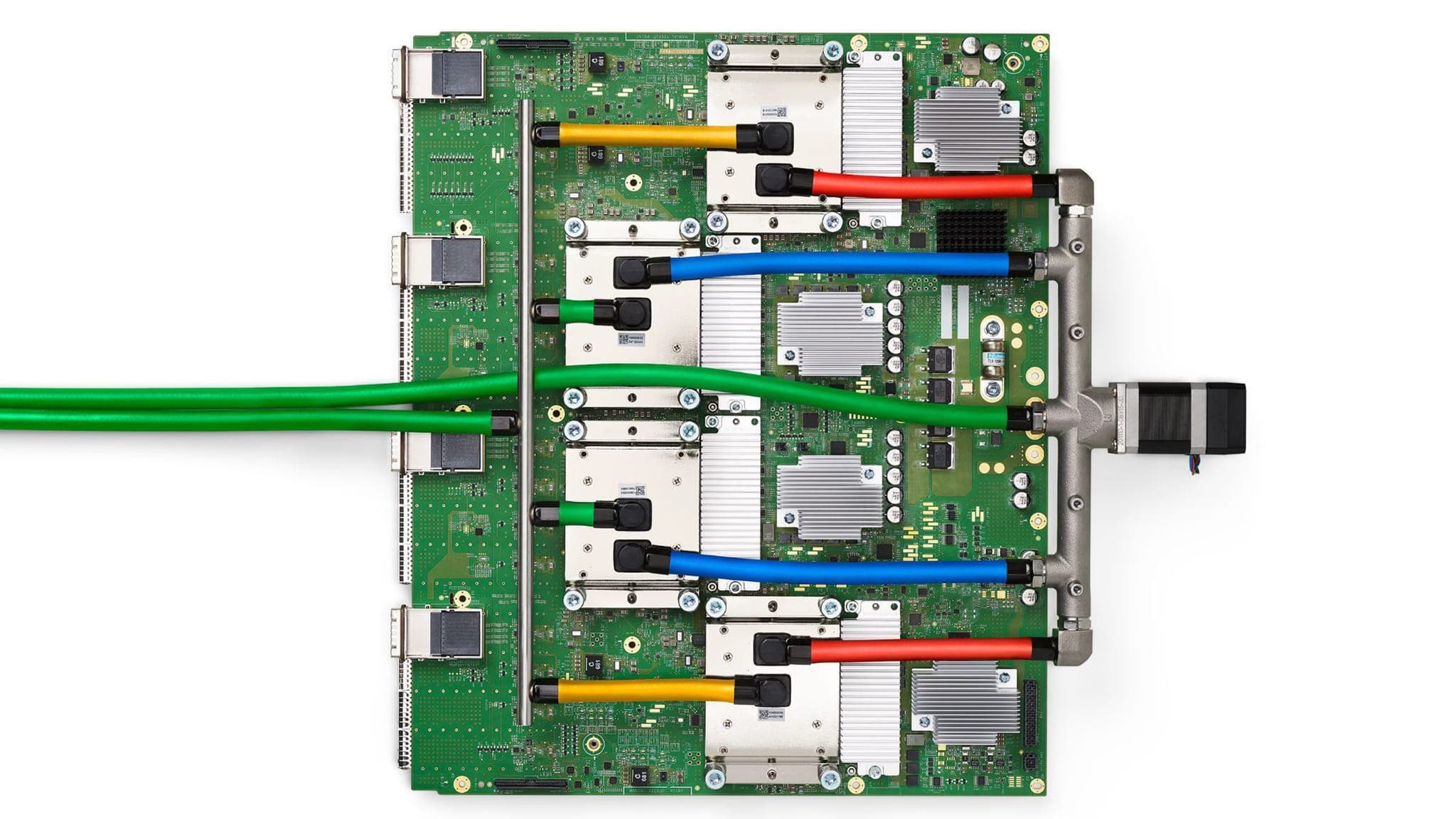
OpenAI plans to buy Google's tensor processing units (TPUs), the custom AI chips Google designs, The Information reported on October 27, citing a person familiar with the matter. The report gave no price, volume or timing, and neither company has announced a deal. OpenAI declined to comment and Google did not immediately respond, Reuters reported.
A purchase would add Google to suppliers that already include at least 26 gigawatts of Nvidia, AMD and custom Broadcom systems and 750 megawatts of Cerebras compute, and would move OpenAI from renting Google's chips, which Reuters reported it began doing in June 2025, to buying them. Google Cloud CEO Thomas Kurian told analysts on October 28 that demand for TPU systems is "strong and accelerating" and that more partnerships are "in the works".
What is reported, and what is on the record
The Information's story, by Ryan Barwick, ran under the headline "OpenAI, a Longtime Nvidia Customer, Plans to Buy Google's AI Chips" and sits behind its paywall. Reuters said the report "did not disclose financial terms or other details." Google had not commented publicly on it by 12:00 UTC on October 30, and OpenAI has made no announcement.
OpenAI's own careers site shows what it is building for. A listing for a Software Engineer, TPU Compilers on its Inference team reads:
We're looking for an engineer to lead the optimization of OpenAI's state-of-the-art frontier models on TPUs.OpenAI job listing, Software Engineer, TPU Compilers, viewed October 30, 2026
The two companies already work together on the selling side. On October 21, OpenAI said its frontier models and Codex are coming to Google Cloud's Model Garden, bought through Google Cloud Marketplace against customers' existing Google Cloud commitments. The same post said Microsoft remains OpenAI's primary cloud partner.
Who else has signed for TPUs
Google started delivering TPU systems to customers' own data centers in the second quarter. Its 10-Q says it began recognizing revenue from those agreements then, "with the significant majority to be recognized in 2027." The buyers that have announced terms:
Buyer | Announced | Terms |
|---|---|---|
Anthropic | Oct. 2025 | Up to 1M TPUs; over 1 GW in 2026 |
Anthropic | Apr. 2026 | Multiple GW from 2027, with Google and Broadcom |
Oracle | Oct. 2026 | TPUs on its cloud from 2027 |
OpenAI | Not announced | Reported plan, no terms |
Sources: Anthropic, October 23, 2025; Anthropic, April 6, 2026; Oracle and Google, October 27, 2026; The Information.
Anthropic said its 2025 expansion was worth tens of billions of dollars. Oracle's TPUs will ramp over several years, the companies said, a deal SaasBuzz has covered. On Alphabet's third-quarter call, Google Cloud CEO Thomas Kurian named Oracle and Crux AI as partners to deliver TPU systems, according to a transcript published by The Motley Fool.
What OpenAI has already committed to
OpenAI's announced deals with Nvidia, AMD and Broadcom add up to at least 26 gigawatts, by SaasBuzz's count of its own releases: at least 10 gigawatts of Nvidia systems under a September 2025 letter of intent, 6 gigawatts of AMD GPUs, and 10 gigawatts of accelerators it designs with Broadcom, due to start in the second half of 2026 and finish by the end of 2029. The first gigawatt each from Nvidia and AMD is also due in the second half of 2026. In January, OpenAI also agreed with Cerebras to add 750 megawatts of low-latency compute.
On top of the chips sit cloud contracts: an incremental $250 billion of Azure services, under the October 2025 agreement that also ended Microsoft's right of first refusal as OpenAI's compute provider, and a $38 billion agreement with AWS over seven years. That is $288 billion of cloud commitments with two providers, before any Google purchase.
What it means for Google and for buyers of AI software
Google's side of a deal would land in a business already growing fast. Google Cloud revenue rose 103% to $30.7 billion in the third quarter, and Alphabet said in its results release that TPU systems sales "were also a meaningful contributor." Google Cloud's backlog reached $560.8 billion on September 30, up $46.9 billion in a quarter and equal to about 18 quarters of its third-quarter revenue. Alphabet spent $51.4 billion on capital expenditures in the quarter, up 114% from a year earlier, and kept its 2026 range at $195 billion to $205 billion, which implies $63 billion to $73 billion in the fourth quarter. SaasBuzz covered the numbers in its report on Alphabet's quarter.
For companies that buy AI models and the software built on them, the evidence points to timing more than price. The most recent TPU deals, Anthropic's multi-gigawatt one and Oracle's, start in 2027, the year Alphabet expects most of its TPU system revenue. The report gave no date for OpenAI. Kurian, announcing OpenAI's models on Google Cloud on October 21, framed Google's pitch around choice and cost: customers can "choose the right model for any given job, helping to deliver optimal quality and lower costs." Whether OpenAI buys chips from Google is, for now, The Information's report and nothing more.
Disclosure: SaasBuzz uses Anthropic's Claude in its research and drafting tools.