Updated October 29, 2026, 2:19 p.m. ET: Adds TPU repurchase terms.
Alphabet (Nasdaq: GOOGL, GOOG) said on October 28 that Google Cloud revenue rose 103% from a year earlier to $30.7 billion in the third quarter, but the company as a whole fell short of Wall Street’s forecasts. Total revenue grew 25% to $127.6 billion, according to its earnings release, against the $128.22 billion that analysts polled by LSEG expected, CNBC reported.
On a GAAP basis, operating income rose 30% to $40.6 billion, a margin of 31.8%, below a $43.19 billion FactSet forecast, CNBC reported. Net income available to common stockholders fell 25% to $26.2 billion, or $2.12 a diluted share, from $2.87, as other income swung to an $8.2 billion loss from a $12.8 billion gain a year earlier.
Alphabet said an $8.7 billion loss on equity securities cut earnings by $0.55 a share. Adding that back gives $2.67, the adjusted figure CNBC compared with LSEG’s consensus of $3.02.
The shares fell more than 10% after hours on October 28, CNBC reported, and were down 13% in early trading the next day, according to a CNBC report updated at 9:46 a.m. ET. CNBC said a close more than 9.77% lower would be the stock’s worst post-earnings move since it went public in 2004.
For companies that buy cloud computing, or sell software that runs on it, the quarter showed Google Cloud growing at what Alphabet called a record pace while Google is still adding capacity. Search, about half of Alphabet’s revenue, slowed, and capital spending exceeded operating cash flow.
Google Cloud, quarter by quarter
Google Cloud’s growth rate has risen for six quarters in a row, from 28% in the first quarter of 2025, and its operating margin has widened every quarter for two years, to 36.2% from 23.7% a year earlier, according to SaasBuzz’s calculations from Alphabet’s releases. Cloud operating income more than tripled to $11.1 billion. Cloud added $15.6 billion of revenue from a year earlier, more than twice the $6.8 billion added by Search & other.
Quarter | Cloud revenue growth (%) | Cloud operating margin (%) | Search & other growth (%) |
|---|---|---|---|
Q4 2024 | 30 | 17.5 | 13 |
Q1 2025 | 28 | 17.8 | 10 |
Q2 2025 | 32 | 20.7 | 12 |
Q3 2025 | 34 | 23.7 | 15 |
Q4 2025 | 48 | 30.1 | 17 |
Q1 2026 | 63 | 32.9 | 19 |
Q2 2026 | 82 | 35.6 | 17 |
Q3 2026 | 103 | 36.2 | 12 |
Source: Alphabet’s earnings releases; SaasBuzz calculations. Growth is from a year earlier; margin is Cloud operating income over Cloud revenue.
The third quarter’s margin gain, 0.6 points, was the smallest in six quarters. Alphabet’s quarterly report on Form 10-Q says the rise in Cloud profit was partly offset by the cost of the TPU hardware it sold and by technical infrastructure usage costs. In July, Anat Ashkenazi, Alphabet’s chief financial officer, told analysts that using third-party capacity while Alphabet builds more of its own would create “modest margin pressure.”
Part of the growth is hardware. Since the second quarter, Cloud revenue has included sales of TPU systems: Google’s custom AI chips, sold as complete systems with software, installation and support, and delivered to customers’ data centers. Alphabet’s 10-Q says some contracts let buyers require it to repurchase the hardware, with maximum payments of $6.6 billion at September 30. It called their fair value “not material” and said it does not believe buyers “have an economic incentive” to do so. The release calls those sales “a meaningful contributor to revenue growth” but gives no figure, and the 10-Q says the significant majority of revenue from the agreements will be recognized in 2027. Inventory, mostly TPU hardware and consumer devices, rose to $13.3 billion from $2.4 billion at the end of 2025.
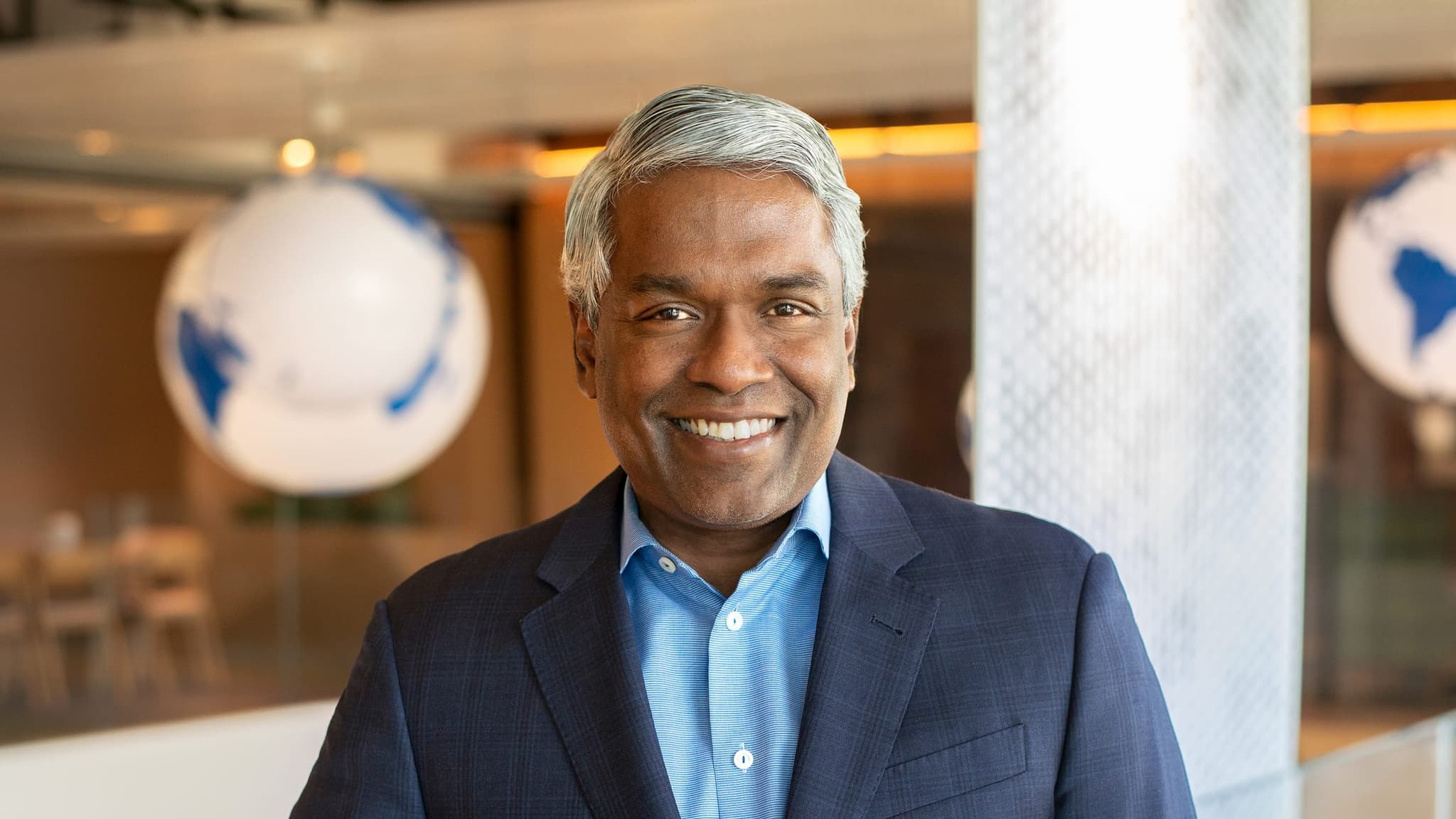
Thomas Kurian, Google Cloud’s CEO, told analysts the business is seeing “extraordinary demand” from AI labs, capital markets and financial services firms, and enterprises, CNBC reported. Sundar Pichai, the CEO of Google and Alphabet, said in his remarks on the call that Google is “working hard to bring more capacity online to meet this long-term demand.”
What Google Cloud has under contract
Google Cloud’s backlog, signed customer commitments not yet recognized as revenue, reached $560.8 billion at September 30, the 10-Q shows. Cloud’s backlog rose $46.9 billion in the quarter, after a $51.6 billion rise in the second quarter.
Alphabet expects to recognize just over 55% of its total backlog of $567.7 billion as revenue over the next 24 months: more than $312 billion, or an average of more than $156 billion a year. Google Cloud’s third-quarter revenue, multiplied by four, comes to about $123 billion.
The backlog includes $16.8 billion from a multi-year agreement with Crux AI, a joint venture with Blackstone that sells data center capacity as a service and in which Alphabet holds a minority stake. Since the first quarter of 2026 Alphabet has also counted contracts of a year or less, about $7.3 billion of the March figure, so the total is not on quite the same basis as the $157.7 billion of a year earlier.
Why Search slowed
Google Search & other revenue rose 12% to $63.35 billion, its slowest growth in five quarters, after 17% in the second quarter and 19% in the first, and was 0.1% higher than in the second quarter. CNBC reported that the total fell short of a $64.96 billion estimate.
Pichai said query growth from a year earlier was the highest in five years. Paid clicks rose 8% from a year earlier, after 13% in each of the first two quarters, and cost per click rose 4%, according to Alphabet’s 10-Q filings.
On the call, Philipp Schindler, Google’s chief business officer, said currency movements were the biggest reason for the slowdown from the second quarter, followed by retail advertisers in Asia-Pacific affected by the end of the European Union’s exemption for low-value imports, and by media and entertainment spending returning to normal after the World Cup, Search Engine Journal reported. He also said fast growth in AI Mode queries weighed on revenue because of lower monetization in AI Mode, according to Search Engine Journal, The Register and CNBC.
Ashkenazi had warned in July that the third quarter would begin “lapping an acceleration in Search performance” that started a year earlier. Search & other grew 15% in the third quarter of 2025, up from 12% in the second. Pichai compared the move to AI search with the move to mobile:
Just like our shift to mobile over a decade ago, we are focused on building the best Search user experience, followed by monetization.Sundar Pichai, CEO of Google and Alphabet, on the October 28 earnings call
Google is putting more ads into AI Mode. On October 28 it said it was scaling ads in AI Mode in 10 countries, plans to add markets including Brazil, Mexico and the United Kingdom in the fourth quarter, and is launching ads in follow-up questions in the US. Google said click-through rates on sponsored and organic product listings in AI Mode are already similar, citing its own US data from August 20 to September 3.
Capital spending and cash
Capital spending, mostly on technical infrastructure, was $51.4 billion in the quarter, up 114% from a year earlier, and $132.0 billion for the first nine months.
Ashkenazi said Alphabet still expects to spend $195 billion to $205 billion in 2026, SiliconANGLE and CNBC reported. Alphabet raised that range in July from $180 billion to $190 billion. Holding it implies fourth-quarter spending of $63.0 billion to $73.0 billion, or $68.0 billion at the midpoint, about a third more than in the third quarter.
For next year, Ashkenazi said: “We continue to expect our capex to increase significantly in 2027, and will provide further details on our Q4 call,” according to CNBC.
Free cash flow, a non-GAAP measure Alphabet defines as operating cash flow minus capital spending, was negative $9.1 billion, the second negative quarter in a row, and $19.7 billion over the past 12 months, down from $73.6 billion a year earlier. Alphabet bought back no stock in the quarter, against $11.5 billion a year earlier. The company raised $12.4 billion by selling shares through its at-the-market program and $28.7 billion from bonds, and its long-term debt reached $125.1 billion, up from $46.5 billion at the end of 2025.
Microsoft, which reported the same evening, kept free cash flow positive at $18.63 billion, CNBC reported (our report on Microsoft’s quarter).
What to watch
Alphabet gave no revenue forecast. Ashkenazi said currency would weigh slightly more in the fourth quarter, mostly on Search and YouTube ads, and that lapping last year’s Search acceleration would keep pressure on growth, Search Engine Journal reported.
Fourth-quarter capital spending against the implied $63.0 billion to $73.0 billion, and the 2027 plan due on the fourth-quarter call
TPU system revenue, mostly due in 2027
Paid clicks, as ads in AI Mode reach Brazil, Mexico and the United Kingdom