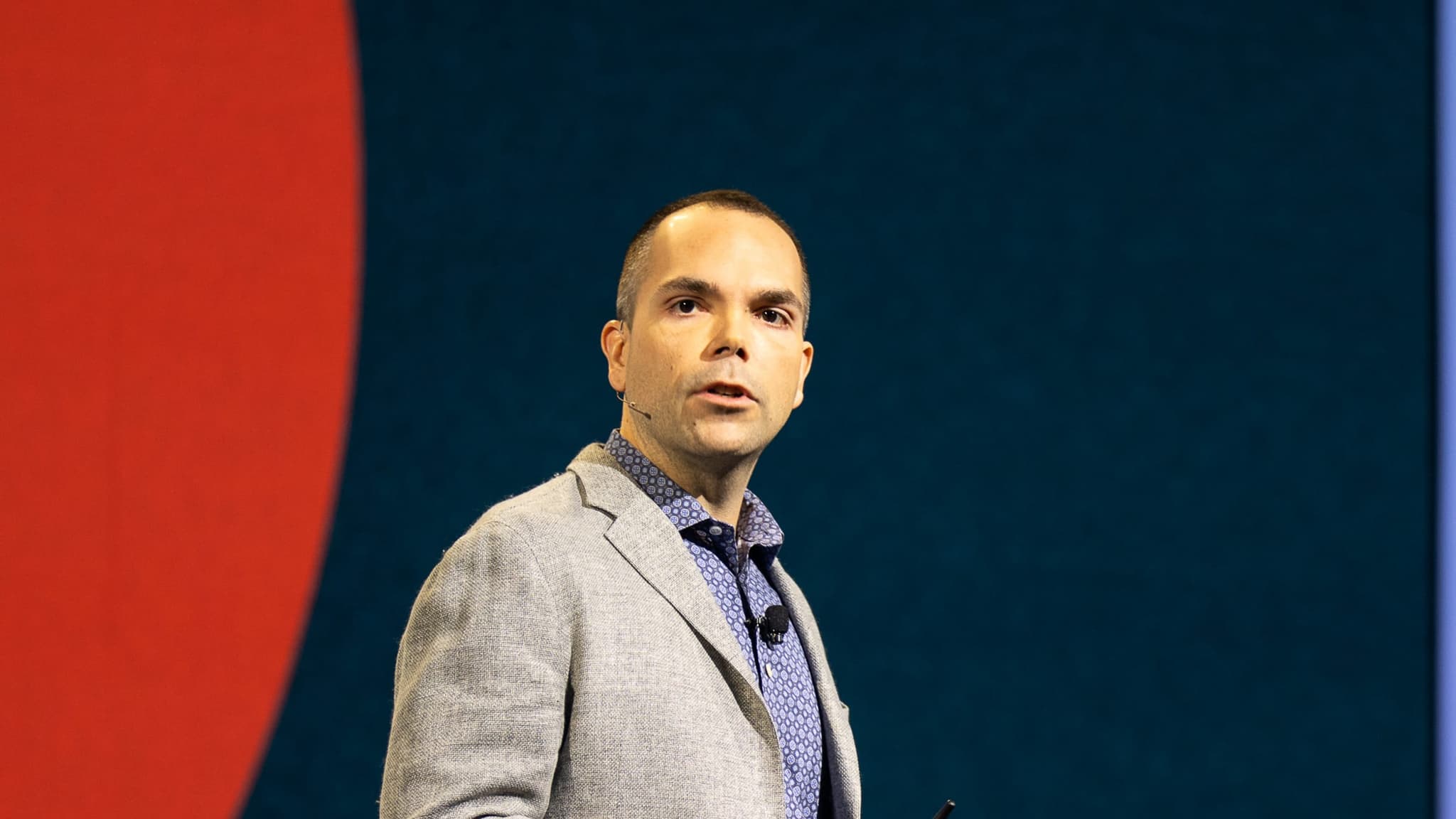
Oracle (NYSE: ORCL) set targets for fiscal 2030 of at least $225 billion in revenue, a non-GAAP operating margin of 40% or more and non-GAAP earnings of at least $21 a share at its investor day in Las Vegas on October 28. The company also said it will raise no more than $20 billion of additional capital through fiscal 2030, on top of a $20 billion share sale already completed. Oracle's fiscal year ends May 31.
The revenue and earnings goals are the ones Oracle set at its October 2025 analyst meeting, now set as floors. The new commitments concern cash: free cash flow turns positive in the second half of fiscal 2028 and reaches at least $30 billion in fiscal 2029, when growth becomes self-funded, Oracle said. Co-CEOs Clay Magouyrk and Mike Sicilia and CFO Hilary Maxson presented. Oracle's shares closed up 10.7% at $144.54, The Motley Fool reported.
What changed from the 2025 targets
Neither Oracle's release nor its slides restate the $166 billion of fiscal 2030 revenue it projected in October 2025 for Oracle Cloud Infrastructure (OCI), up then from $144 billion.
Target | Oct. 2025 | Oct. 2026 |
|---|---|---|
FY27 revenue | $85B | $90B+ |
FY27 EPS | $8.00 | $8.10 |
FY30 revenue | $225B | $225B+ |
FY30 EPS | $21.00 | $21+ |
FY30 margin | Not set | 40%+ |
FY30 OCI revenue | $166B | Not restated |
Free cash flow | Not set | Positive 2H FY28; $30B+ FY29 |
More capital to FY30 | Not set | $20B at most |
Source: Oracle's slides of October 16, 2025 and October 28, 2026. EPS and margin are non-GAAP.
Oracle's infrastructure slides listed Google's TPU among its accelerator partners, a day after Oracle said it would bring Google's TPUs to OCI from 2027.
The growth the targets require
Oracle's fiscal 2026 revenue was $67.4 billion, so $225 billion takes growth of 35.2% a year for four years, by SaasBuzz's calculation. With fiscal 2027 guided at $90 billion or more, $5 billion above the 2025 plan, the last three years need 35.7% a year, against 38.3% on the 2025 path. Non-GAAP EPS must rise 37.4% a year from $8.10 in fiscal 2027 to reach $21.
The margin floor is below Oracle's fiscal 2026 non-GAAP operating margin of 42.9%. The CFO's slides said the shift toward lower-margin AI infrastructure will put some pressure on margins in the near term, and that infrastructure margins improve as contracted projects ramp up. At 40% of $225 billion, non-GAAP operating income would be $90 billion, 3.1 times fiscal 2026's $28.9 billion.
How Oracle says it will pay for the build-out
In June, Oracle said it expected to raise about $40 billion in fiscal 2027, including a $20 billion at-the-market program, which sells new shares over time at market prices. That sale was completed in the first quarter of fiscal 2027, which ended August 31, for net proceeds of $19.9 billion, its quarterly report shows.
The new cap limits further capital-markets raises to $20 billion through fiscal 2030, currently expected to be $10 billion of stock and $10 billion of gross debt, excluding refinancing. With the completed sale, that is $40 billion of new capital for fiscal 2027 through 2030, the amount Oracle said in June it expected to raise in fiscal 2027 alone. Gross debt will stay flat after the new $10 billion as maturities are refinanced, the slides said, and net debt, including vendor financing and leases, will be below 3.5 times adjusted EBITDA in fiscal 2029.
Three arrangements and Oracle's own cash flow are meant to cover the rest. With vendor financing, Oracle pays for hardware over time, more closely in step with customer revenue; the CFO's example has the vendor financing 70% of the equipment. With bring-your-own-hardware, the customer buys the GPUs and Oracle runs them. With prepayments, customers pay in advance for the hardware. In June, Oracle said the prepaid and customer-supplied hardware in its large AI contracts totaled $75 billion.
The slides showed the effect on an illustrative 1-gigawatt contract, worth about $80 billion over five years if Oracle buys the hardware:
1GW contract | 2-year capex | Annual revenue |
|---|---|---|
Oracle buys the hardware | $37B | $16B |
Vendor financing | $18B | $16B |
Customer's own hardware | $6B | $11B |
Source: Oracle's CFO slides; approximate figures. Vendor financing includes repayments to the vendor.
About 6 gigawatts remain to be built after 850 megawatts delivered in the first quarter, or about $220 billion of capital spending at the example's cost, the slides said. They showed the three arrangements cutting upfront cash needs by about half, and operating cash covering the rest apart from the final $20 billion. The release, filed with the SEC, put it this way:
Vendor financing, customer-provided hardware and customer prepayments are expected to reduce upfront cash requirements through the transition to positive free cash flow.Oracle's Investor Day release, October 28, 2026
Why the cash timeline matters
Capital spending rose to $55.7 billion in fiscal 2026 from $21.2 billion a year earlier, and free cash flow was negative $23.7 billion, which Oracle said reflected "investments to support the growth of its Cloud Infrastructure business." Borrowings were $125.3 billion on August 31. Before October 28, the shares had lost about a third of their value this year on concern that rates and debt would make Oracle's AI build-out too costly, CNBC reported, adding that S&P rates Oracle BBB-, the lowest investment grade. Oracle's slides name an investment-grade rating as its first capital priority.
Oracle points to its backlog: remaining performance obligations of $664 billion at the end of August, about 90% of it for cloud infrastructure. Analysts polled by LSEG had expected fiscal 2030 revenue of $224.2 billion, CNBC reported, within 0.4% of Oracle's floor.
What to watch
Next come second-quarter results, for the three months ending November 30, guided to revenue growth of 30% to 34%. The bigger test is the second half of fiscal 2028, December 2027 to May 2028, when Oracle expects free cash flow to turn positive.