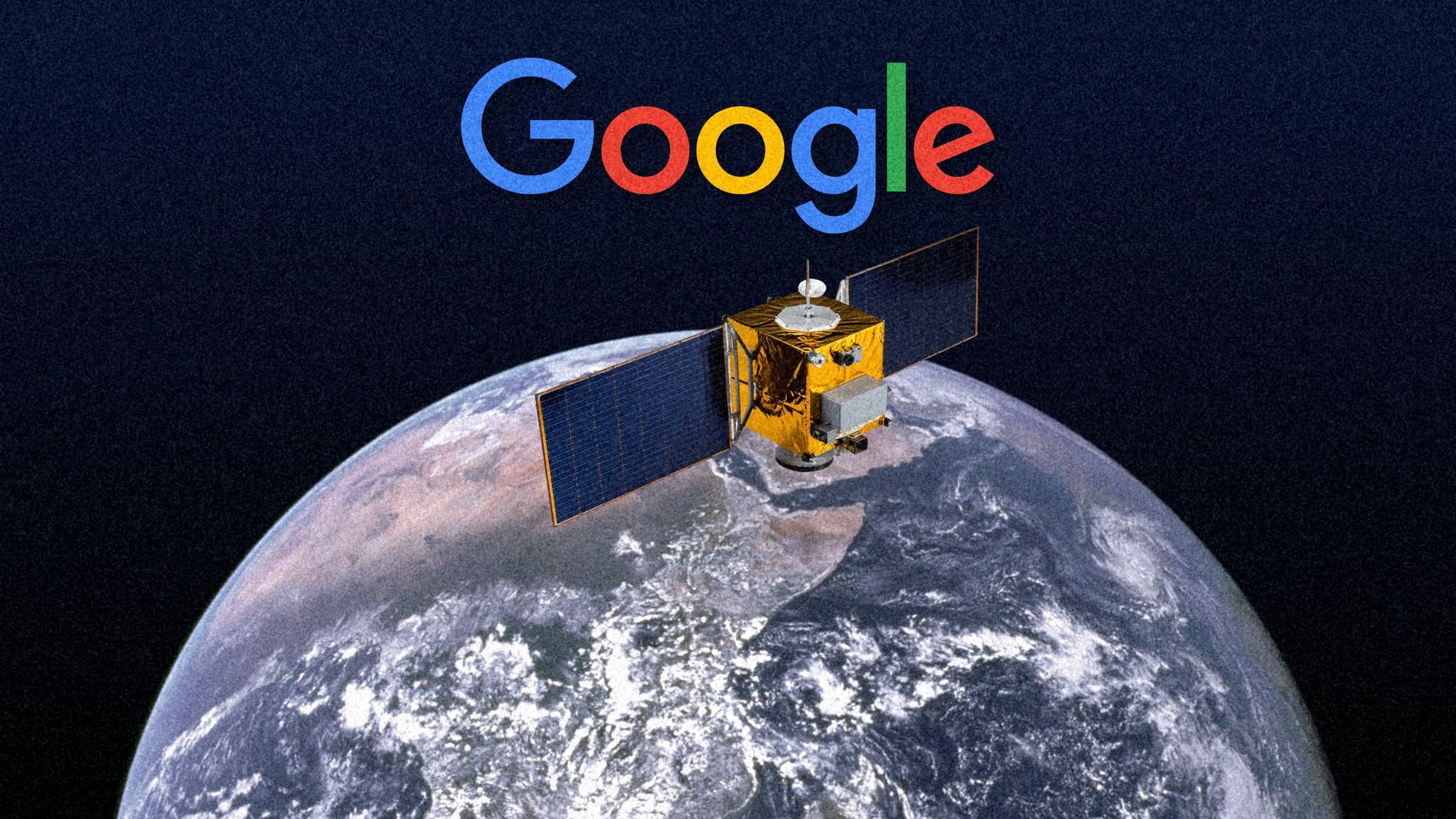
Google said on October 30 that the first Project Suncatcher prototype satellite, launched October 1, has run a prompt on Gemma 4 on one of its TPU chips in orbit and sent the answer back to Earth: a haiku about being in space. In its announcement, Google called it "the first-ever AI response from a data center class TPU in orbit."
The satellite is the first hardware in Google's plan to run AI computing on solar-powered satellites, a bet on where power for AI could come from as Amazon, Microsoft, Alphabet and Meta spent $610.8 billion on property and equipment in the year to September. It shows a chip can boot and answer from orbit, not yet that chips survive months of radiation, that satellites can work together, or that the economics close.
Sundar Pichai, CEO of Google and Alphabet, described the sequence on X.
Post on X by @sundarpichai
A ‘hello world’ milestone for Project Suncatcher 🚀 After launching our prototype satellite a few weeks ago, we’ve now successfully sent a command up to orbit, booted up the TPU, ran the prompt, and received our first complete response back on earth - a haiku! https://t.co/kOFmETUskm
What is in orbit
The satellite was built with Planet and launched on SpaceX's Transporter-18 rideshare mission, Google said at launch. It carries four Google Tensor Processing Units and generates up to 1 kilowatt of electricity, TechCrunch reported, so it can run only one TPU at a time, for about 20 minutes.
After weeks of commissioning, the team sent its first prompt during a ground-station pass, asking the onboard Gemma 4 open model for a haiku about being in space. The answer came down as the satellite passed Svalbard, Norway: "Blue marble below / Data streams in silent grace / Starlight feeds my core."
Google posted a video of the first response.
What the prototype proves, and what it doesn't
Google's first is about its own chip, not AI in space: in December 2025, CNBC reported that Starcloud's satellite, carrying one Nvidia H100 GPU, was already running Google's Gemma model in orbit.
The open questions are the ones Google lists next: "a series of tests to evaluate how TPUs perform under thermal stress and radiation exposure in orbit." On the ground, Google hit Trillium, its v6e Cloud TPU, with a proton beam: the memory began showing irregularities at 2 krad(Si), "nearly three times" the expected five-year mission dose of 750 rad(Si), with no hard failures up to 15 krad(Si), according to Google's November 2025 research post. By SaasBuzz's arithmetic, the 15 krad(Si) tested is 20 times the mission dose. Google later redid the tests with less shielding and saw slightly more logic errors, TechCrunch reported in October.
Those margins favor inference over training. "The error rate is very low if you're thinking about typical inference operations, right? Like one in a million," Travis Beals, senior director of Paradigms of Intelligence at Google and the author of both blog posts, told TechCrunch at launch. "On the other hand, it was already problematic for doing, say, some mega-scale training run."
The road from one satellite to a cluster
Google's research design is a cluster of 81 satellites flying in close formation, within a radius of 1 kilometer at an altitude of 650 kilometers, joined by optical links so they can work as one system. The prototype is a single satellite; the optical links between spacecraft are for the next pair, TechCrunch reported.
Date | Step | Status |
|---|---|---|
Nov. 2025 | Research paper | Published |
Oct. 1, 2026 | Prototype launch | In orbit |
Oct. 30, 2026 | First AI response | Announced |
2027 | Two linked satellites | Planned |
Mid-2030s | Launch under $200/kg | Projected |
Source: Google and Google Research posts of November 4, 2025, October 1 and October 30, 2026. The launch price is a projection.
The November 2025 post had two prototype satellites "slated to launch" with Planet "by early 2027." On October 30, Google's account on X said what that phase is for.
Post on X by @Google
The next phase of Project Suncatcher is scheduled for 2027. We’ll send two satellites into orbit to test whether we can perform AI computations distributed across multiple satellites so that we can one day run more complex workloads. https://t.co/AJNL9u2EzD
The economics depend on rockets. Google's researchers projected that launch prices "may fall to less than $200/kg by the mid-2030s," at which point launching and operating a space data center "could become roughly comparable" to the energy costs of one on the ground, per kilowatt per year. The peer-reviewed paper puts that path at 370,000 tons on Starship at 200 tons a flight over 10 years, TechCrunch reported, adding that the researchers stress their analysis isn't an economic feasibility study. By SaasBuzz's arithmetic that is about 1,850 flights, or 185 a year: 37 times the five flights TechCrunch said Starship has never exceeded in a year.
Who else is racing
SpaceX asked the Federal Communications Commission in January for permission to launch up to 1 million solar-powered satellites to serve as AI data centers. Elon Musk said in Austin that space data centers will be cheaper than ground ones in as little as two to three years, CNBC reported in June: "Increasing power on Earth becomes harder over time and more expensive over time."
Starcloud launched its H100 in November 2025. TechCrunch reported that Starcloud and Cowboy Space expect to run inference on individual satellites, and that Google is largely alone in planning high-speed links for workloads spread across satellites.
Not every investor is sold on the numbers. Duncan Davidson, a partner at Bullpen Capital, whose firm has an indirect interest in Starcloud, told CNBC the engineering problems were being solved but that "economically, right now, it's marginal."
What it means for cloud and AI buyers
Nothing to buy yet. Google describes Suncatcher as a "long-term research moonshot." The prototype makes up to 1 kilowatt; Google's research post looks ahead to "gigawatt-scale constellations," and a gigawatt is a million times that. For now, AI capacity is built on the ground, and Alphabet's own capital spending is expected to rise significantly in 2027, its finance chief has said.
The test does hint at which work would move first: Google's radiation results and Beals's comments point to inference, the answering of prompts, rather than training. The milestones to watch are the radiation and thermal results from this satellite, the launch of the linked pair in 2027, and whether Starship flies often enough to bring launch prices toward $200 a kilogram.