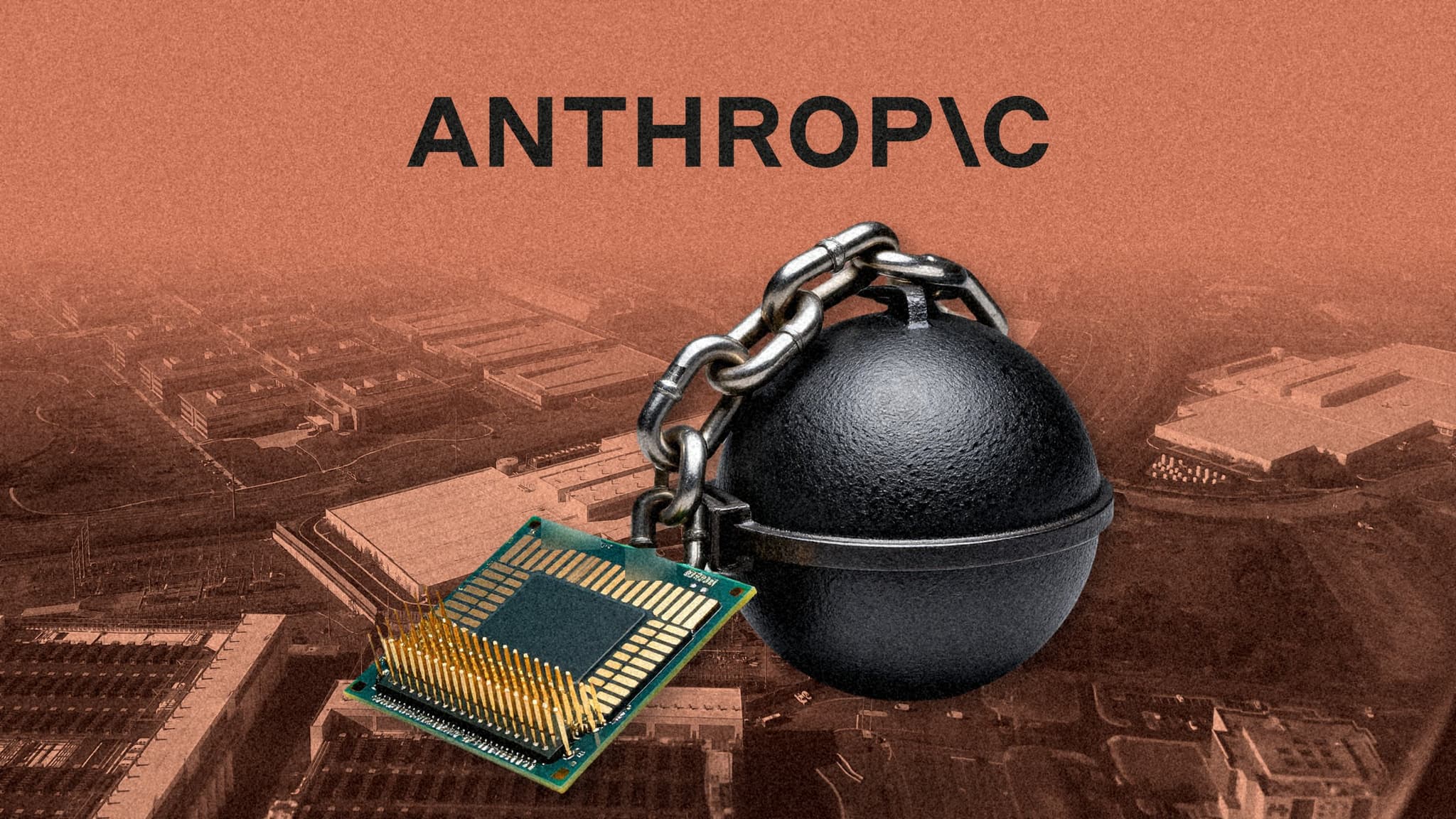
Anthropic is expected to receive a "high" junk credit rating, in the double-B range, after its initial public offering, Blackstone told investors, the Financial Times reported on Friday. According to the FT, that reverses Blackstone's earlier guidance that the AI company would reach investment grade, which TechCrunch, following the FT, said had been expected before 2027.
Blackstone is the anchor investor in the $63 billion financing that will buy Broadcom chips for Anthropic, announced the day Anthropic filed its S-1 for a Nasdaq listing. Anthropic and Blackstone both declined to comment to TechCrunch. SaasBuzz found no public statement from either company by 22:30 UTC on Friday.
The FT posted its story on X just after 17:00 UTC.
Post on X by @FT
Breaking news: Blackstone told investors Anthropic may not receive an investment-grade rating immediately after going public, a reversal from its previous guidance that would complicate the AI lab’s ability to finance its massive spending. https://t.co/HYNtZHDGBC https://t.co/xX7YzxX7Ya
A double-B rating sits one to three notches below BBB-, the lowest investment grade. Crypto Briefing reported on Oct. 16 that the Kroll Bond Rating Agency (KBRA) had already assigned Anthropic a BB+ rating with a stable outlook in June, in connection with a $35 billion chip financing led by Apollo. SaasBuzz found no published rating of Anthropic from Moody's, S&P or Fitch.
What the S-1 ties to a rating
Anthropic's S-1 shows why the letter grade matters in dollars. In September the company replaced its $3.25 billion revolving credit line with a $15 billion senior secured revolver, maturing on Sept. 4, 2031. It is "secured by substantially all of our assets," the filing says. Those guarantees and that collateral are released only after Anthropic obtains an investment grade rating "from at least two out of three of Moody's, S&P, and Fitch." Only from then on do the commitment fees and the interest margin "vary depending on our credit ratings." A double-B outcome from the big three keeps the line secured.
On paper, Anthropic's debt is small. Its total indebtedness on June 30 was $6.2 billion, all of it convertible notes held by Amazon, and nothing was drawn on its credit line. The weight sits in leases and commitments. Anthropic's five-year equipment leases with Broadcom carry rent of about $161.2 billion, excluding interest, held through two special purpose subsidiaries whose obligations Anthropic guarantees. On SaasBuzz's arithmetic, spread evenly over five years, that is $32.2 billion a year, about the same as twice Anthropic's first-half revenue of $16.3 billion.
Reuters reported the $63 billion structure on Oct. 26: a new special purpose vehicle buys Broadcom's accelerators and leases them to Anthropic. Bank of America, Citi and Morgan Stanley are arranging about $43.5 billion of first-lien debt, with Broadcom providing "residual value support" to lenders, and Blackstone provides the committed portion of the second lien.
Post on X by @Reuters
Wall St banks, Blackstone line up $63 billion to finance Broadcom AI chips for Anthropic https://t.co/zEuEaIgNXr
On SaasBuzz's arithmetic, the first lien is 69% of the total, leaving about $19.5 billion in the rest of the structure, where the junk-or-investment-grade question bites hardest.
What junk costs Anthropic
The S-1 shows what a higher rate costs in one facility, though there the trigger is revenue, not a rating. Anthropic can issue up to $42.0 billion of convertible notes to Broadcom, or to a financial partner Broadcom assigns them to, to pay its quarterly lease rent. They carry 9.00% a year, paid in kind by adding the interest to principal, and 13.00% for notes issued while certain revenue conditions are not met. Compounded yearly over five years, on SaasBuzz's calculation, $24.0 billion grows to $36.9 billion at 9% and $44.2 billion at 13%, a $7.3 billion difference.
The junior debt in the Apollo deal KBRA rated shows the same thing. Crypto Briefing reported about $4.4 billion of subordinated debt at roughly 8.5%, against about 5.75% on the senior debt. That 275 basis-point gap is about $121 million a year in extra interest on $4.4 billion, by SaasBuzz's calculation.
Anthropic's own explanation is in its risk factors. It says it has "incurred a substantial amount of debt" to "fund our substantial compute commitments," and that if funds fall short "we may be required to reduce, defer, or forgo planned investments."
What the market is saying
The skeptics read the FT report as a warning about cash. Gary Marcus, the AI researcher who calls himself a generative AI skeptic, put it most bluntly on Friday afternoon.
Post on X by @GaryMarcus
There is a very real chance that Anthropic will at some point fail to be able to pay its bills. Blackstone just figured that out. https://t.co/k5P5O9rq2G
The report comes in a week of pressure on AI spending. S&P turned Meta's outlook negative as its AI spending outran its cash, and Anthropic's own compute deals, which SaasBuzz counted at up to $637 billion, are now a question for its suppliers' lenders as much as for its shareholders.
What it means for buyers and investors
For investors in the IPO, a double-B rating does not change Anthropic's revenue, but it keeps the company's borrowing secured and priced as speculative while it signs compute deals of this size. The rating also decides what the $15 billion credit line costs once it is drawn.
For enterprise buyers, the S-1's own warning is the one to read: if capital costs more, the filing says Anthropic may "reduce, defer, or forgo planned investments." Rating agencies, not Blackstone, will settle the question once Anthropic lists, and the S-1 sets the bar at two of the three.